


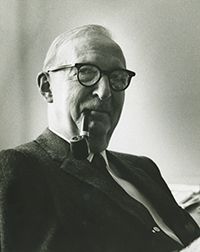
Glenn R. Morrow (1892-1973) gilt als ein herausragender Platonforscher, dessen Schwerpunkt die politische Philosophie war. Er war Professor an der Universität von Pennsylvania.
In der Literatur rund um das Thema Atlantis wurde Morrow durch seine Untersuchung bekannt, ob Platon dort, wo er über historische Sachverhalte schreibt, auch zuverlässig ist. Das bekannte Urteil von Glenn R. Morrow lautete:
"Evidently Plato knew what he was writing about. Our survey has failed to show any important instances in which Plato has distorted facts in the interests of theory. In most cases he relies on traditions generally accepted, or accepted by the most competent of his contemporaries; and when he departs from these generally accepted traditions, he is moved by critical considerations that were decisive also for Aristotle." (Morrow (1960) p. 72)
Sein Urteil gipfelte in der bekannten Aussage von "Plato's loyalty to history".(Morrow (1960) p. 72)
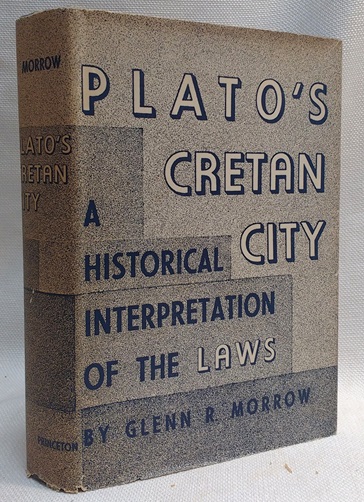
Im Januar 2026 entdeckte ich in der Fußnote 952 auf S. 352 des Werkes "Solons Götter – Platons Theologie" von Beate Fränzle einen Hinweis darauf, dass Glenn R. Morrow – ebenfalls in einer Fußnote – eine explizite Aussage zu Platons Atlantis gemacht hatte, und zwar zugunsten der Existenz von Atlantis!
Glenn R. Morrow spricht zunächst über Platons Plan im Dialog Nomoi, eine neue Stadt auf der Insel Kreta zu gründen, und warum Platon diese Stadt gerade in Kreta gründen möchte:
"In spite of its lack of political and cultural importance in the classical period, Plato as well as his countrymen had a lively memory of the island's former glories, of the vast power that Minos, the ancient king, once exerted over the Hellenic Sea, and of the many respects in which Crete had contributed to Greek culture in the archaic period. ... ... ... Whether facts or fancies – and we are now beginning to realize that there is usually a basis of fact beneath the fancies – these stories and beliefs indicate the hold that the great island held on the imagination of the Greeks of historical times."(Morrow (1960) S. 17-18)
Bis zu diesem Punkt hat Morrow noch nicht über Atlantis gesprochen, doch hier setzt er eine Fußnote und zeigt sich als Unterstützer der Atlantishypothese von K.T. Frost:
"It has been plausibly suggested by Frost, 'The Critias and Minoan Crete,' in JHS XXXIII, 1913, 189-206, that in the legend of Atlantis the glories of the ancient Cretan empire of the sea exerted their spell over Plato without his knowing the source of the enchantment. Plato says in the Timaeus that Solon got this Story from the priests of Egypt and planned to write an epic on the theme. Now it is possible that Plato was stating a fact, not a fiction, and that this uncompleted work was known to him and was the basis of his famous legend. Except for the location of Atlantis beyond the pillars of Hercules, the details in the Atlantis story fit perfectly the [S. 19] geographical position of Crete and the power of Cnossos over the adjacent islands. The story preserved in the Egyptian records would of course be an account from the Egyptian point of view. What the nonseafaring Egyptians of that period would describe as an attack from the far west or from the ends of the world would hardly seem so to the Greeks of Solon's day, to whom Crete was nearer the southern than the western extremity of their world; hence the displacement of the mythical islands beyond the pillars of Hercules. The sudden and complete destruction of the Minoan power, a fact now attested by the archaeologists, and its disappearance henceforth from Egyptian knowledge might well have seemed like a physical catastrophe, the subsidence of the island into the sea, as it is described in the tale told by Solon. See also W. Brandenstein, Atlantis, Vienna, 1951, for a similar hypothesis."(Morrow (1960) S. 18 f. Fußnote 8)
Mit diesen Aussagen hat sich Glenn R. Morrow unmissverständlich offen für Atlantis als einem realen Ort gezeigt. Er unterstützt die Atlantishypothese von K.T. Frost, hält eine Überlieferung über Ägypten für realistisch möglich, und verweist auf das Werk von Wilhelm Brandenstein, der ebenfalls ein klarer Atlantisbefürworter war.
Später bekräftigt Morrow diese Gedanken auch im Haupttext des Buches, also nicht mehr in einer Fußnote:
"It is Solon to whom Plato attributes one of his most genial creations, the story of the empire of Atlantis and of the heroic defense put up against it by the empire of ancient Athens. It is quite possible, as I have said, that this story is in fact not a free creation, but a tradition about Solon preserved in Plato's family which he accepted and used without being fully aware of the historical truth that underlay it."(Morrow (1960) S. 80)
Hingegen nennt Morrow Platons Aussagen über Ur-Athen "obviously the product of imagination" (Morrow (1960) S. 90), ganz im Sinne von K. T. Frost, der den bekannten Satz schrieb:
"The whole description of the Athenian state in these dialogues seems much more fictitious than that of Atlantis itself."
Schließlich schreibt Morrow: Der Sieg von Ur-Athen gegen Atlantis "is obviously but a prehistorical replica of the Athenian victory over the Persians" (Morrow (1960) S. 91). Zudem wird darauf hingewiesen, dass der Sieg von Ur-Athen über Atlantis der Sieg einer Landmacht über eine Seemacht ist (Morrow (1960) S. 98).
Glenn R. Morrow ist eindeutig dem Lager der Atlantisbefürworter zuzurechnen. Er gehört in die lange Reihe von Wissenschaftlern, die in der Minoischen Kultur einen möglichen und realistischen Kandidaten für Atlantis als einem realen Ort erblickt haben.
Eine Frage bleibt: Ich befasse mich jetzt seit rund 25 Jahren mit Platons Atlantis, und doch bin ich erst jetzt durch Zufall darauf aufmerksam geworden, dass Glenn R. Morrow ein Atlantisbefürworter war. Wie kann das sein? Die Antwort ist einfach: Sowohl Atlantisbefürworter als auch Atlantisskeptiker haben ihren Hausaufgaben nicht gemacht. Die Atlantisskeptiker, meist etablierte Wissenschaftler, glauben, dass sie solche gewichtigen Stimmen gegen ihre Meinung einfach ausblenden können. Also schweigen sie über Morrow. Doch mit Wissenschaft hat ein solches Vorgehen natürlich nichts zu tun. Und die Atlantisbefürworter arbeiten häufig nicht auf wissenschaftlichem Niveau und haben ein schlechtes Vorurteil gegen die Wissenschaft, so dass sie sich nicht die Mühe machen, die Literatur zu studieren.
Morrow (1960): Glenn R. Morrow, Plato's Cretan City – A Historical Interpretation of the Laws, Princeton University Press, Princeton 1960.
Fränzle (2025): Beate Fränzle, Solons Götter – Platons Theologie. Mit einem Anhang: Zur Rezeption der sogenannten Kataklysmen-Theorie (Aristoteles, Cuvier, Platon), Band 30 der Reihe: Flensburger Studien zu Literatur und Theologie, hrsgg. von Markus Pohlmeyer, Verlag IGEL Literatur & Wissenschaft, Hamburg 2025.